Using a mobile phone while driving in Queensland
We’ve all been in our car and heard our phone go off in one way or another and been tempted to check it. However, with the development of technology often running ahead of the development of legislation, several rule changes have taken place over a relatively short period of time, making it difficult to know what you can do and when.
Further, there are not only legal consequences that you need to consider, but also safety ones.
Approximately 28 people are killed and over 1500 are seriously injured in QLD due to driver distraction. This can come as no surprise considering that 33% of QLD drivers surveyed said that they use a mobile phone for the purposes of texting or browsing while behind the wheel.
Throughout this article, we will discuss when you can and can’t use your phone behind the wheel in Queensland, what the penalties are if you do get caught, what the realistic risks are, and practical tips to help prevent you from breaking one of these laws.
What are the laws around mobile phone use while driving in Queensland?
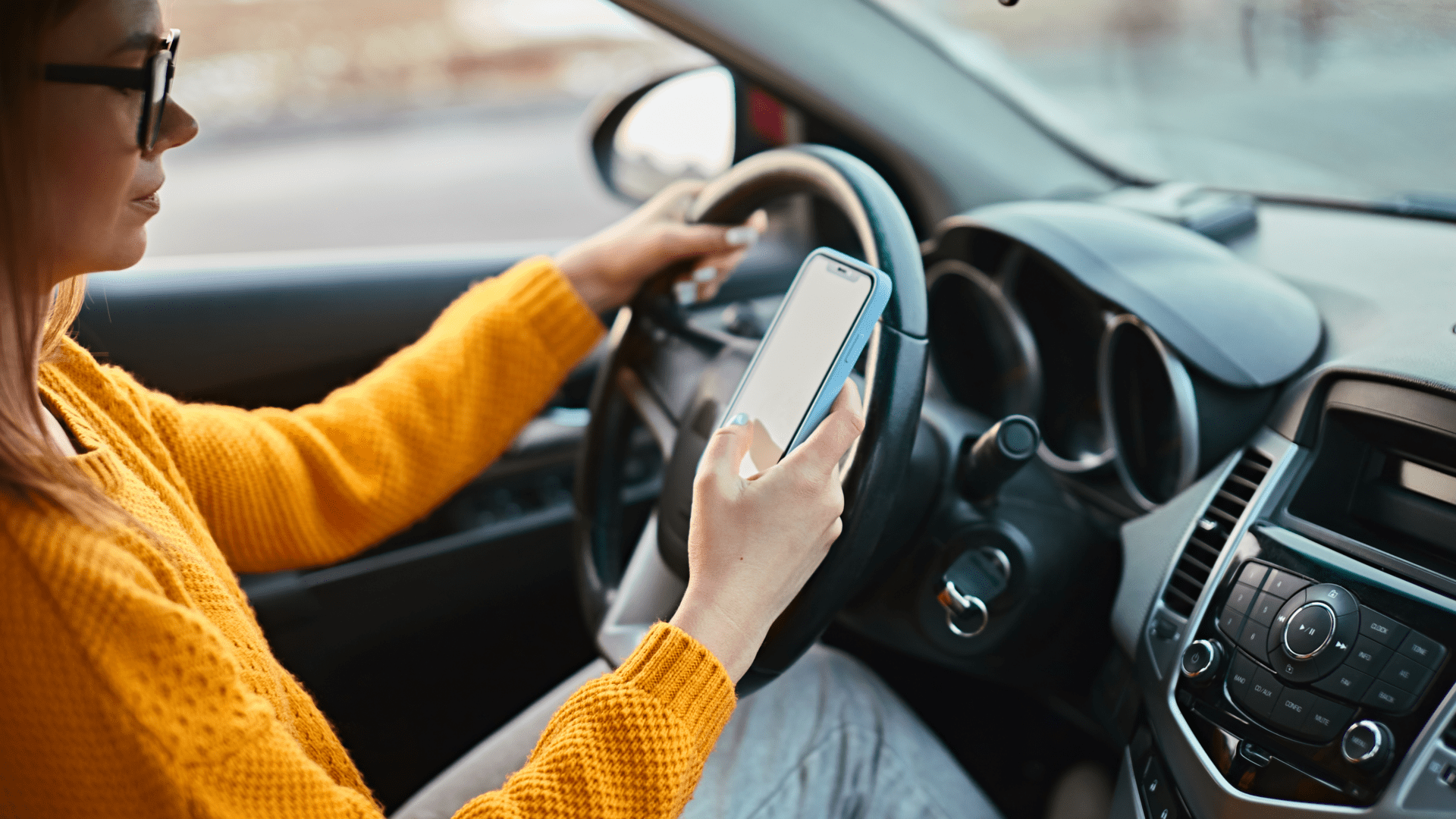
In Queensland it is illegal for all licence types to hold their phone or have it resting on a body part, for example having your phone turned off but, on your lap, while driving. However, if you are on an open or P2 licence you can keep your device in your pocket as long as you cannot see it and don’t touch the screen. This includes while stopped but not parked, such as at traffic lights.
You are able to use hands-free features on your device as long as where your phone is placed is secure and doesn’t obstruct the driver’s view in any way. These hands-free features can include answering a call, accepting a trip as a rideshare driver, navigation, or skipping a song, however all these must be voice-activated and not involve physically touching the screen.
An exception to this is when you are using your phone to pay while stationary, this includes paying at drive-throughs or car parks, in which case you can hold your phone.
What is the fine for using a mobile phone while driving in Queensland?
All licence holders in QLD receive the same penalty for using a mobile while operating a vehicle, $1209 fine and four demerit points. QLD issues double demerit points for repeat offences within 12 months.

L and P1 licence holders
For a first offence, L and P1 licence holders will face a $1209 fine and four demerit points for a first offence, and eight demerit points for a subsequent offence.
P2 licence holders
For a first offence, P2 licence holders will face a $1209 fine and four demerit points for a first offence, and eight demerit points for a subsequent offence.
Open licence holders
For a first offence, open licence holders will face a $1209 fine and four demerit points for a first offence, and eight demerit points for a subsequent offence.
Can I contest this infringement notice in Queensland?
You can dispute a speeding fine in court if you believe you were issued it incorrectly. You must dispute it within 28 days from the infringement notice date, or you will face penalties for an overdue fine. Once disputed, do not pay the fine and make sure you keep a copy of it for your records.
To dispute the fine, you can:
- Do it online by submitting an Election for Court
- Download and print this form and submit it via email ([email protected]) or mail to:
Queensland Revenue Office
GPO Box 1447
BRISBANE QLD 4001
Once submitted you’ll be mailed a date to appear in court to your last known address; this is a complaint summons.

If you wish to dispute the fine, you must do it within 28 days of the date on the notice otherwise:
- The State Penalties Enforcement Registry may take enforcement action to recover the amount of the fine (including any referral fees)
- Demerit points will be added to your traffic record from the date the offence was committed
How to pay a fine for using a mobile phone while driving in Queensland
Once the fine has been issued, you have 28 days from the date shown on the fine/infringement to pay it in full or organise a payment plan – which can be arranged for fines of $200 or more.
1. Pay Online
You can pay using the payment reference number found on the infringement notice or the infringement notice number. If paying using the infringement notice number, you will also need your Queensland driver’s license or customer reference number.
2. Pay via BPAY
BPAY payments are made via your financial instructions either online or using your phone. It may take several days for a BPAY payment to be processed, so check with your bank to ensure you’re paying your fine on time.
You’ll require the payment reference number and the biller code on your fine to pay via BPAY. Two payment references may be provided, one for paying the fine in full and the other for paying the first installment in a voluntary installment plan.
BPAY may not be available for all infringements, so make sure to double-check your infringement notice to see if this is available to you.

3. Pay via Australia Post
You will need the payment reference number on your fine to pay at Australia Post. Please note, Australia Post cannot accept payments for handwritten fines. You can pay using cash, cheque or card (a credit card surcharge will apply).
Australia Post cannot accept any payments after the due date of a fine.
4. Pay in Person
You can pay in person using cash or card (credit card surcharge will apply) by bringing your fine to any transport and monitoring service centre.
5. Pay via Post
You cannot pay your fine with cash via post. You can post your fine and a cheque or money order payable to the Department of Transport and Main Roads, to the following address:
Department of Transport and Main Roads
PO Box 673
Fortitude Valley QLD 4006
The payment needs to be received within 28 days from the date of issue shown on the notice.
Can I transfer my fine to another driver?
In short yes, if you were not the driver then you can have the fine redirected to the person who was operating the vehicle, further if the vehicle was stolen or disposed of before the fine was issued you can request a transfer without a nominated party, but you do need to provide other relevant details.
There are two ways to transfer a fine, the first is with a statutory declaration and the second is using the online Transfer a Fine service.
Do not pay the fine if you are going to transfer it and it needs to be done within 28 days to avoid further penalties including enforcement action, additional fees, and demerit points being added to your licence.
If you submit a false declaration, either online or on a statutory declaration form, you may face penalties including fines and prison sentences.
Statutory declaration
You should have received a partially filled out statutory declaration form with your fine if you received it in the mail, however if you did not receive one, lost it, or was issued a handwritten fine on the spot, you can download one from the Queensland Government website.
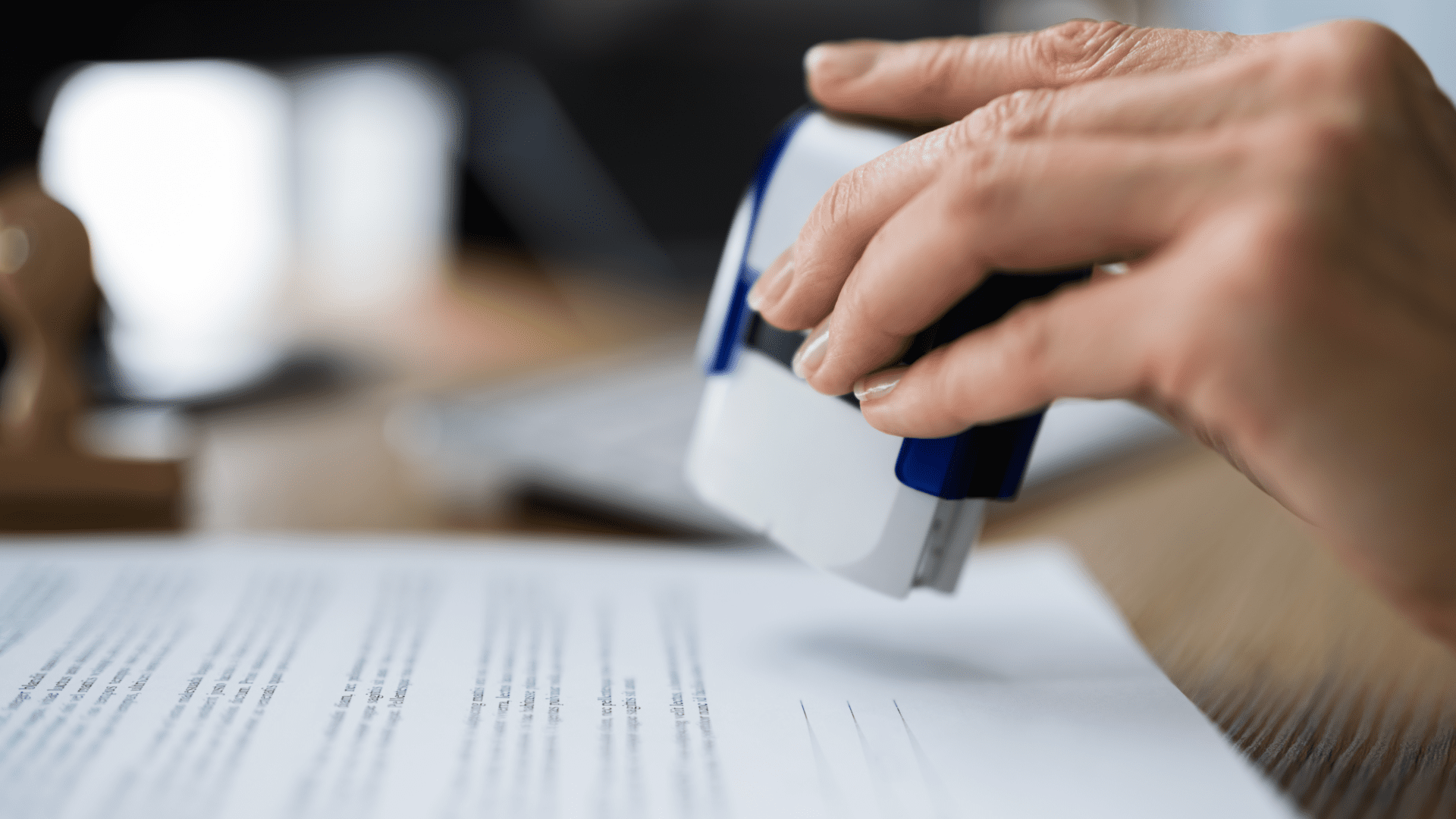
On the form you will need to include:
- The full name and address of the person nominating to have the fine transferred to
- Confirmation of who was in charge of the vehicle at the time
- The infringement notice numberDate of the fine
- Details of what the offence was e.g. using a phone while driving
You will then need this witnessed by a Justice of the Peace, Commissioner for Declarations, notary public, a lawyer, or another person authorised under the law of the state or federal government. These services are often available at certain times at shopping centers, post offices, and libraries.
You then need to mail your statutory declaration and infringement notice to:
Queensland Revenue Office
GPO Box 1447
BRISBANE QLD 4001
We recommend keeping a copy of both items in case something gets lost in transit.
Transfer a Fine online
To be eligible to nominate another person through the online service, you need to have a Queensland drivers’ licence or customer reference number and can log in online and the person you’re nominating either has an Australian driver’s licence or an international licence and a customer reference number with Transport and Main Roads.
To use the Transfer a Fine online service, you need to log in and choose the fine you wish to transfer, you will need to do this with each individual fine if there is more than one, you will then be asked for further details. You will also have the option to upload supporting documents if needed.
Once you have completed and submitted the transfer request, the details will be sent to the Queensland Revenue Office, and you will get a confirmation notice which you can save. The transaction will also be logged in your My Account.
Where does the money from a phone use fine go in Queensland?
The Transport Operations (Road Use Management) Act 1995 requires that all money collected for penalties from camera-detected offences, in excess of the administrative costs, must be used for specific road safety purposes and improvement.
In 2023 the Queensland Government said that ‘every cent’ collected from fines will be re-invested into road safety, with $1.7 billion gone toward Queensland roads upgrades, education programs, initiatives to make school zones safer and to develop policies to improve road crashes and trauma already and $1.69 billion has been committed towards road safety infrastructure through the Targeted Road Safety Program.
The penalties currently in place align with the National Road Safety Strategy for 2021-30 and aim to deter drivers and passengers from reckless and dangerous behavior, with a target set for Queensland to reduce fatalities by 50% and serious injuries by 30%.
Tips for safe driving with a mobile phone
The main problem with using a phone while driving is the distraction. It might not seem like just glancing down at your phone for a single second may not feel that significant, but even at just 50km/h you travel over 13 meters blind.
Further, the simple act of holding a conversation can significantly reduce your ability to take in visual information and respond appropriately in time.
Below is a selection of tips to help you avoid being distracted by your phone, and if you do choose to use your hands-free features, to do so as safely as possible.
Turn your phone off
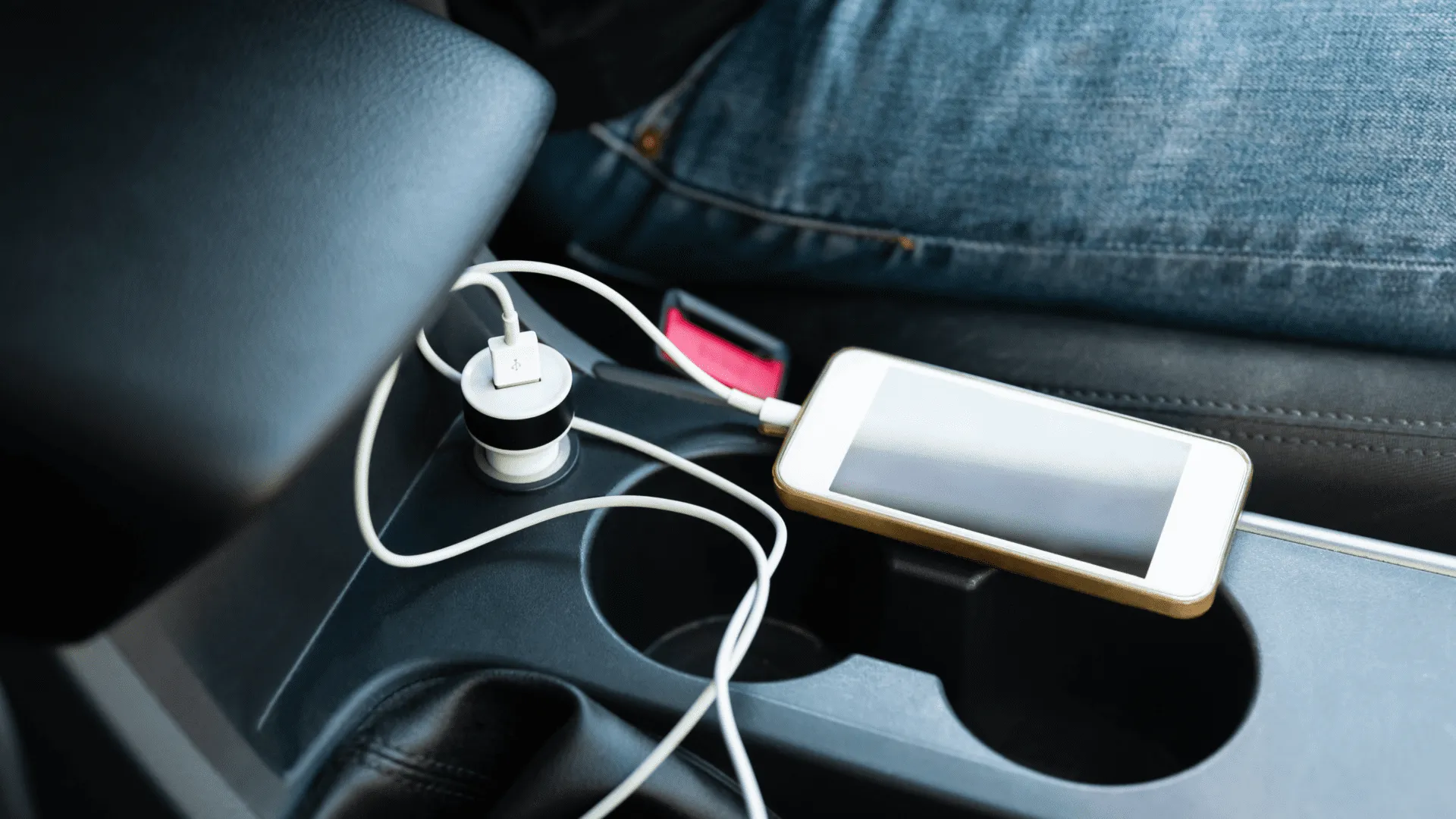
It might seem like overkill when features like airplane mode exist but knowing that all you have to do is tap and you can check your screen can be enough of a temptation to slip up. Having your phone off means that you can’t just check your texts while at traffic lights, you have to wait for it to turn on, by which time the lights will have probably changed already, so why even bother?
Do not automatically connect to your car
The convenience of having your phone connected to your car before you even have to think about it can be nice, but it does mean that without consciously making the decision, you will be receiving calls and potentially notifications while you are behind the wheel.
Disabling this feature will ensure that you have to make the choice to use your hands-free features every time you take off.
Put it away
Whether it’s the glove box or the boot, keeping your phone out of arm’s reach will stop you from the habit of just checking your screen, being able to change your mind mid-trip to put your location into maps, or to feel the need to look down at notifications.
Do not disturb
Your do not disturb feature is ideal for situations like driving, depending on your device, it prevents calls and notifications coming through, can automatically respond to let others know you are driving and will get back to them, and even schedule when it turns on and off, so you can set it up before taking off on big trips in case you forget to enable it on the day.
Use playlists
Have the music you’re going to listen to already selected and ready to go so that you don’t get tempted to touch your screen to skip or search for a song.
Know where you’re going
Before heading off, make sure you have already looked up when you’re going and how you’re going to get there so that your maps are only to assist you if you get lost. Further, ensure that you have already selected your destination and route before taking off so that you won’t feel the need to adjust your GPS while driving.
Turn down your volume

Before leaving, turn down the volume of your phone so that way if you do wish to take calls, it won’t be as much of a distraction if you are in a moment of needing extra concentration, such as being in a busy parking lot.
Pull over
If you do want to answer a call, check your phone, change the song, look at your maps again, or anything else, you can always pull over. Doing so will ensure that you don’t miss whoever is ringing you while also not placing yourself and other road users at further risk while you’re driving.
Learn more about road safety with Road Sense Australia
We all know what it’s like to be tempted to use your phone for one reason or another while you’re behind the wheel, but ultimately, that call, text, or update can be the difference between arriving to your destination safely or being the reason for a collision. You can wait until you are no longer in charge of a vehicle before reaching for your phone, if not you might just get caught.
If you find yourself in a situation where you have been charged with a driving offence, we offer an evidence-based Traffic Offender Intervention Program (TOIP). Our program is not about judgement but providing all our participants with the information and education they need to make the best choices they can on the road and create safer road users. TOIP is available to be completed online either in a virtual classroom over Zoom or a self-paced program that you can stop and start and have access to over 32 days, we also offer a face-to-face option in some locations. Further, our course is NSW court-accredited and recognised by courts in WA and QLD.
We also offer a workplace program, Drive It Home (DIH), to help change attitudes and ensure that all workers are safe and that employers are ensuring they have met all their work health and safety obligations and highlight that employee safety is a priority.
If you would like more information or to book please check out our TOIP page, our DIH page, or reach out to us.