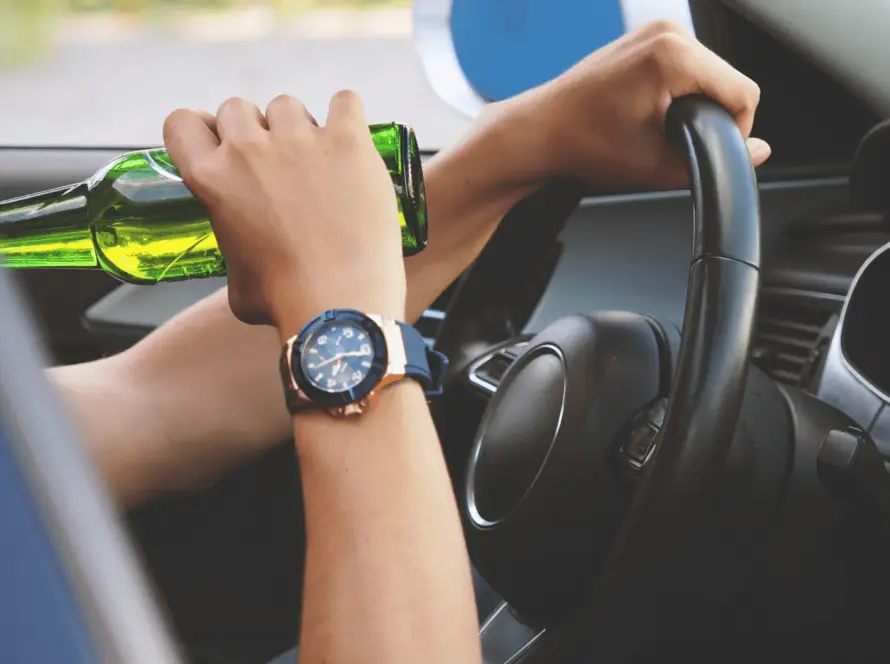
Safe driving depends on clear thinking, sound judgment, and quick responses to the events unfolding around you. Even small delays in reaction time can make the difference between avoiding a hazard and being involved in a serious crash.
That’s why driving after taking drugs, whether illegal substances, prescription medication or over-the-counter products, can impair your ability to get from A to B safely. In Australia, drug driving accounts for an estimated 13% of fatal road crashes.¹
Keep reading to learn about the dangers of pairing drugs and driving, offence penalties, personal repercussions, and tips for protecting yourself and others on the road.
What is drug driving?
A drug is a chemical substance with a physiological effect that can alter how you think, feel and act.² Drug driving is when you operate a vehicle with prescription, over-the-counter or illicit drugs, as well as certain herbal remedies, in your system. It’s different to a drink driving offence, which involves exceeding the Blood Alcohol Concentration limit.
Many drugs slow reaction times, harm concentration, affect coordination, and impair judgement, capabilities that are key to safe driving.³
The potential side effects mean that it’s crucial to read warning labels on all prescription and over-the-counter medications carefully, follow medical advice, and avoid driving if you suspect that symptoms may interfere with your driving ability.
How drugs affect your ability to drive
While the exact effects of drug use vary based on the type, amount and individual⁴, these substances generally impact the way the brain processes information and therefore the mental and physical skills used while driving.
Let’s take a closer look at how common drugs can limit your ability to drive.
Cannabis (THC)
Whether recreational or medicinal, cannabis is a psychoactive drug that affects several skills drivers rely on to stay safe on the road, including coordination, concentration, and reaction times.⁴
The primary psychoactive compound in cannabis is delta-9-tetrahydrocannabinol (THC). This chemical travels through the bloodstream to the brain, where it binds to cannabinoid-1 (CB1) receptors and disrupts normal signalling in the prefrontal cortex, hippocampus, cerebellum, and temporal regions.⁵
These areas are responsible for executive functioning needed for safe driving, including memory, attention, and psychomotor performance.
These effects are highlighted in studies using critical tracking tests, reaction time measures, divided attention tasks, and position monitoring, all of which show reduced driving performance after cannabis use.⁶
For example, studies have found that drivers who have used cannabis are more likely to weave within their lane and take longer to react to unexpected events.⁷
While some drivers might try to offset these effects by driving more slowly, this doesn’t remove the risk. As driving tasks become more complex, such as navigating traffic or sudden changes on the road, vehicle control continues to decline.⁶
Stimulants
The central nervous system (CNS) is made up of the brain and spinal cord and serves as the body’s main control centre. It receives and interprets information from the body and environment, then directs responses such as movement, speech, breathing and heart function.⁸
Stimulants are drugs that speed up activity in the central nervous system. Examples include MDMA, cocaine, and crystal meth.
These chemicals can ramp up levels of neurotransmitters like dopamine, serotonin, and norepinephrine in the brain’s synapses. Depending on the drug, mechanisms include boosting the release of these neurotransmitters, preventing their reuptake into neurons, or replicating their effects by binding to their neural receptors.⁹ Either way, this increase results in more energy, alertness, and confidence.¹⁰
Drivers who have taken stimulants are more likely to overestimate their ability, take unnecessary risks, drive aggressively, have poor judgment, have difficulty maintaining focus, and engage in impulsive decision-making.⁴
Vision may also be affected, with some drivers experiencing blurred or reduced sight or misjudging where other vehicles and hazards are positioned on the road.⁴
Unfortunately, the risks don’t end when the drug begins to wear off.
Driving during the “come down” phase can be just as dangerous, as concentration and coordination can be impacted, and fatigue may set in.⁴
Opiates
Opiates, which are a type of opioid, are depressant drugs that slow down activity in the central nervous system.¹¹ Examples include heroin, methadone, morphine, and codeine.
More specifically, opioids attach to and activate opioid receptors on neurons that manage feelings of pain and pleasure. When opioids bind to these receptors, they stop pain signal transmission and release a surge of dopamine throughout the body.¹²
When driving, these effects can cause drowsiness and reduce alertness.³ They also interfere with concentration and coordination, slow reaction times⁴, doubling the risk of a crash.¹³
Over-the-counter and prescription drugs
Some prescription and over-the-counter medicines can affect your ability to drive safely, even when they’re taken exactly as directed.
Common side effects that can impact driving include drowsiness, blurred vision, reduced concentration, slower reaction times, and changes in mood or behaviour.⁴
As these risks aren’t always obvious or immediate, it’s important to check warning labels and seek advice from your doctor or pharmacist before driving.
Oral fluid tests: how is drug use measured on Australian roads?
In Australia, police use random roadside drug testing to detect the presence of common substances like ecstasy, cocaine, THC from cannabis, and methamphetamine.³ ⁴ ¹⁴ ¹⁵ ¹⁶ ¹⁷ ¹⁸ ¹⁹
Drivers may be pulled over for an oral fluid test at random breath testing sites, targeted drug testing locations, or during routine patrols. You can be tested at any time, not just if police suspect impairment.
This process is similar to an alcohol breath test. You’ll be asked to wipe a testing device along your tongue to collect a saliva sample.
Results from this saliva test are usually available within three to five minutes, and research suggests that most drivers test negative and continue on their way.²⁰
When the initial test is positive, a second roadside oral fluid test is required, and the saliva sample is sent to a laboratory for confirmation. If it’s not possible to collect an oral fluid sample, you may need to provide a blood sample.
Importantly, an offence is only recorded if the laboratory analysis confirms the presence of an illegal drug.
Note that in jurisdictions such as Queensland and Victoria, it’s an offence to refuse to comply with drug testing requirements. This includes failing to stop for a drug test, refusing to provide a requested sample, or not cooperating with police.³ ¹⁴
Drug impairment assessments
You may be required to undergo a drug impairment assessment, also known as a sobriety assessment, if police believe that drugs are actively affecting your ability to drive safely.¹⁴ ²¹
The police officer will determine how the test is carried out, based on observations of your behaviour, appearance, and overall condition. This may include checking your ability to understand instructions, examining coordination, and noting signs like abnormal eye movements that can indicate drug use.
If there is reasonable suspicion of impairment, you’ll typically need to undergo a blood or urine test for further analysis to confirm the presence of drugs.
Penalties for drug driving in Australia
Australia takes a zero-tolerance approach to drug driving. However, there is a clear distinction between driving with prescription or illicit drugs present in your system and driving under the influence (DUI) of these drugs.
Presence-based drug driving offences are based on detection alone, whereas DUI offences apply when drugs affect a driver’s ability to safely control a motor vehicle.
Therefore, you can be penalised for the presence of an illegal drug even if you feel fine to drive. If impairment is proven, the penalties are usually much harsher.
Here, we break down the legal penalties of mixing drugs and driving in each state and territory.
Road Transport Act 2013 governs drug driving penalties in NSW. Automatic disqualification periods are in place in the absence of a court-appointed set period.
Presence-based offences
In NSW²¹, you can be charged with a drug driving offence if one of the following drugs is detected in your oral fluid, blood, or urine:
- Active THC from cannabis
- Methylamphetamine
- MDMA
- Cocaine
- Morphine (unless you can show it was taken lawfully for medical purposes²¹)
First offence
- Penalty notice fine: $704
- Licence suspension period (if dealt with by penalty notice): 3 months
- Maximum court-imposed fine: 20 penalty units at $110 per unit at the time of writing²²
- Minimum disqualification: 3 months
- Maximum disqualification: 6 months
- Automatic disqualification: 6 months
Second or subsequent offence
- Maximum court-imposed fine: 30 penalty units at $110 per unit at the time of writing
- Minimum disqualification: 6 months
- Maximum disqualification: Unlimited
- Automatic disqualification: 12 months
DUI offences
You can be charged with a DUI if police believe your ability to control a vehicle is affected. This applies to illegal, prescription, and over-the-counter drugs.²³
First offence
- Maximum court-imposed fine: 30 penalty units at $110 per unit at the time of writing
- Maximum prison term: 18 months
- Minimum disqualification: 12 months
- Maximum disqualification: Unlimited
- Automatic disqualification: 3 years
Second or subsequent offence
- Maximum court-imposed fine: 50 penalty units at $110 per unit at the time of writing
- Maximum prison term: 2 years
- Minimum disqualification: 2 years
- Maximum disqualification: Unlimited
- Automatic disqualification: 5 years
In Queensland, the laws around drug driving are detailed in the Transport Operations (Road Use Management) Act 1995.
Presence-based offences
If you return a positive roadside drug test in Queensland, you’ll face immediate licence suspension for 24 hours.³
What happens next depends on your driving history:
- If you are charged and do not have any pending drug driving charges, your licence usually remains valid until the matter is finalised by a court or withdrawn
- If you are charged and have pending drug driving charges, your licence will be suspended immediately until your court date
When dealing with a charge for driving with a relevant drug present, a magistrate may:
- Issue a fine of up to 14 penalty units at $166.90 per unit at the time of writing²⁴
- Disqualify you from driving for 1 to 9 months
- Sentence you to up to 3 months’ imprisonment
DUI offences
You may face a DUI charge if police determine that drugs have impaired your ability to drive. If charged, your driver’s licence is suspended straight away and remains suspended until the matter is resolved.³
First offence
- Minimum licence disqualification: 6 months
- Maximum court-imposed fine: 28 penalty units at $166.90 per unit at the time of writing
- Maximum term of imprisonment: 9 months
Second or subsequent offence (within 5 years)
- Maximum licence disqualification: 2 years
- Maximum court-imposed fine: 60 penalty units at $166.90 per unit at the time of writing
- Maximum term of imprisonment: 18 months
Victorian drug driving legislation is laid out in the Road Safety Act 1986.
Presence-based offences
If you return a positive roadside drug test in Victoria, regardless of signs of impairment, you’ll face serious penalties.¹⁴
The consequences depend on whether the matter is dealt with by infringement or through the courts, and whether it’s a repeat offence:
First offence (infringement notice issued)
- Fine: 3 penalty units at $203.51 per unit at the time of writing²⁵
- Learner permit or licence suspension: 6 months
- Drug driver behaviour change program: Must be completed within the first 3 months, or the licence or permit will be cancelled
First offence (court matter)
- Maximum fine: 12 penalty units at $203.51 per unit at the time of writing
- Learner permit or licence suspension: At least 6 months
- Drug driver behaviour change program: Required
- Zero BAC condition: 3 years
- Conviction: May be recorded by the court
Second offence
- Maximum fine: 60 penalty units at $203.51 per unit at the time of writing
- Learner permit or licence suspension: At least 12 months
- Intensive drink and drug driver behaviour change program: Required
- Zero BAC condition: 3 years
- Conviction: May be recorded by the court
Third offence or more
- Maximum fine: 120 penalty units at $203.51 per unit at the time of writing
- Learner permit or licence suspension: At least 12 months
- Intensive drink and drug driver behaviour change program: Required
- Zero BAC condition: 3 years
- Conviction: May be recorded by the court
DUI offences
Driving while impaired by drugs is treated more seriously, with penalties increasing with each offence.¹⁴
First offence
- Maximum fine: 12 penalty units at $203.51 per unit at the time of writing
- Learner permit or licence suspension: At least 12 months
- Intensive drink and drug driver behaviour change program: Required
- Zero BAC condition: 3 years
- Conviction: May be recorded by the court
Second offence
- Maximum fine: 120 penalty units at $203.51 per unit at the time of writing
- Maximum term of imprisonment: 12 months
- Learner permit or licence suspension: At least 2 years
- Intensive drink and drug driver behaviour change program: Required
- Zero BAC condition: 3 years
- Conviction: May be recorded by the court
Third or subsequent offence
- Maximum fine: 180 penalty units at $203.51 per unit at the time of writing
- Maximum term of imprisonment: 18 months
- Learner permit or licence suspension: At least 2 years
- Intensive drink and drug driver behaviour change program: Required
- Zero BAC condition: 3 years
- Conviction: May be recorded by the court
Drug driving in Tasmania is governed by the Road Safety (Alcohol and Drugs) Act 1970 (Tas), which imposes various penalties depending on the offence.¹⁹
Presence-based offences
If a prescribed illicit drug is found in your system while you are driving with no lawful excuse, you may face fines, license disqualification and even prison time.
First offence
- Court-imposed fine: 2 to 10 penalty units at $205 per unit at the time of writing²⁶
- Term of imprisonment: 3 months
- Licence disqualification: Up to 12 months
Second or subsequent offence
- Court-imposed fine: 4 to 20 penalty units at $205 per unit at the time of writing
- Term of imprisonment: 6 months
- Licence disqualification: 6 to 24 months
DUI offences
Driving under the influence of drugs in Tasmania carries harsh penalties. Police also have the power to arrest you without a warrant and impound your vehicle.¹⁹
First offence
- Court-imposed fine: 5 to 30 penalty units at $205 per unit at the time of writing
- Term of imprisonment: 12 months
- Licence disqualification: 12 to 36 months
Second or subsequent offence
- Court-imposed fine: 10 to 60 penalty units at $205 per unit at the time of writing
- Term of imprisonment: 24 months
- Licence disqualification: 24 to 72 months
Drug driving offences in Western Australia are governed by the Road Traffic Act 1974 (WA), which sets out the following penalties:
Presence-based offences
In WA, you can be charged if roadside testing detects cannabis, MDMA and methamphetamine in your oral fluid. Police do not need to prove impairment for this offence.¹⁸
First offence penalties
- Maximum court-imposed fine: 34 to 75 penalty units at $50 per unit at the time of writing²⁷
- Minimum licence disqualification: 10 months
Second offence penalties
- Court-imposed fine: 63 to 105 penalty units at $50 per unit at the time of writing
- Alternative penalty: 9 months’ imprisonment
- Minimum licence disqualification: 30 months
Subsequent offence penalties
- Court-imposed fine: 63 to 150 penalty units at $50 per unit at the time of writing
- Alternative penalty: 18 months’ imprisonment
- Minimum licence disqualification: Life
Note that WA Police may issue a 24-hour driving prohibition notice to drivers who:
- test positive for specified drugs, or
- refuse to comply with a roadside drug test
Breaching a prohibition notice is an offence and may result in a $600 fine.
DUI offences
Driving while impaired by drugs is treated as a more serious offence. Charges are usually brought when you’re caught driving dangerously or erratically, or when impairment is confirmed through a driver assessment or blood testing.¹⁸
First offence penalties
- Court-imposed fine: 34 to 75 penalty units at $50 per unit at the time of writing
- Minimum licence disqualification: 10 months
Second offence penalties
- Court-imposed fine: 63 to 105 penalty units at $50 per unit at the time of writing
- Alternative penalty: ⁹ months’ imprisonment
- Minimum licence disqualification: 30 months
Third or subsequent offence penalties
- Court-imposed fine: 63 to 105 penalty units at $50 per unit at the time of writing
- Alternative penalty: 18 months’ imprisonment
- Minimum licence disqualification: Life
Under the NT’s Traffic Act 1987, it’s an offence to drive with a prohibited drug in your system. Penalties increase for repeat offences and are based on previous findings of guilt, including prior drink driving, drug driving, or refusal to provide a test.²⁸
First offence penalties
- Traffic infringement notice: $400, or
- Court-imposed fine: 5 penalty units at $189 per unit at the time of writing²⁹
- Minimum licence disqualification: 3 months
- Maximum term of imprisonment: Not applicable
Second offence penalties
- Traffic infringement notice: $400, or
- Court-imposed fine: 7.5 penalty units at $189 per unit at the time of writing
- Minimum licence disqualification: 6 months
- Maximum term of imprisonment: 3 months
Third or subsequent offence penalties
- Traffic infringement notice: $400, or
- Court-imposed fine: 7.5 penalty units at $189 per unit at the time of writing
- Minimum licence disqualification: 6 months
- Maximum term of imprisonment: 6 months
The Road Traffic Act 1961 (SA) governs drug driving in South Australia.
Presence-based offences
South Australia Police perform random roadside saliva testing to check for the presence of THC from cannabis, cocaine, methylamphetamine and MDMA.¹⁵
If you’re convicted of a drug driving offence, the court will impose at least the minimum licence disqualification.³⁰ That said, financial penalties and demerit points also apply:
First offence
- Minimum licence disqualification: 6 months
- Fine: $900 to $1,300
Second offence
- Minimum licence disqualification: 12 months
- Fine: $1,100 to $1,600
Third offence
- Minimum licence disqualification: 2 years (3 years for subsequent offences)
- Fine: $1,500 to $2,200
DUI offences
In South Australia, you are considered to be driving under the influence of drugs when you are too physically or mentally impaired to exercise effective control of your vehicle.
Police observations can be used as evidence, and while drug test results may support the charge, a positive test isn’t required.
As this offence is separate from presence-based drug driving, you cannot be convicted of both for the same incident.
First offence
- Minimum licence disqualification: 12 months
- Fine: $1,100 to $1,600
- Maximum imprisonment: 3 months
Subsequent offence
- Minimum licence disqualification: 3 years
- Fine: $1,900 to $2,900
- Maximum imprisonment: 6 months
In the ACT, the Road Traffic Act (Alcohol and Drugs) Act 1977 sets out the penalties for drug driving.
Presence-based offences
It’s an offence to drive with certain drugs in your system in the ACT, whether the substance is illegal or otherwise.¹⁶
First offence penalties
- Maximum fine: 25 penalty units at $160 per unit at the time of writing³¹
- Minimum licence disqualification: 3 months
- Default licence disqualification (if no court order is made): 6 months
Second or subsequent offence penalties
- Maximum fine: 50 penalty units at $160 per unit at the time of writing; and/or
- Maximum imprisonment: 6 months
- Minimum licence disqualification: 6 months
- Default licence disqualification: 12 months
DUI offences
Under Section 24 of the Road Traffic Act, you’ll experience more serious penalties for driving under the influence of drugs:
First offence penalties
- Maximum fine: 100 penalty units at $160 per unit at the time of writing; and/or
- Maximum imprisonment: 12 months
Second or subsequent offence penalties
- Maximum fine: 200 penalty units at $160 per unit at the time of writing; and/or
- Maximum imprisonment: 2 years
Tips for drivers who take prescription medication
If there is a prescribed drug present in your system, you’ll need to take some extra precautions to stay safe on the road.
Think about the tips below before you decide to take the wheel:
- Read the medication instructions and pay close attention to any driving or safety warnings on the label.
- Take your medicine exactly as prescribed and never exceed the recommended dose.
- Be particularly careful when starting a new medication or changing the dosage, as side effects are often strongest at this stage.
- Avoid driving if you have missed a dose of medication that manages symptoms, which could affect your ability to drive safely.
- Do not mix prescription medicines with alcohol or other drugs unless your doctor or pharmacist has confirmed it is safe to do so.
- Speak with your doctor or pharmacist if you are unsure whether your medication makes driving unsafe.
- If your current medication affects your driving, ask your doctor whether a different treatment may be suitable.
- Never stop taking a prescribed medicine or adjust the dose without medical advice.
- Use alternative transport options, like public transport, taxis, or lifts from friends and family, wherever possible.
Book a TOIP program with Road Sense Australia
If you’ve been referred to a Traffic Offender Intervention Program after a drink or drug driving offence, completing a trusted course is a clear way of showing your commitment to improving your road safety.
Road Sense Australia delivers a TOIP course that focuses on road safety, the consequences of dangerous driving, and reducing the risk of reoffending. Participants are supported to understand hazards, make safer decisions and develop more responsible driving habits.
This program is NSW court-accredited and also recognised by courts in Western Australia and Queensland. Book your place today and choose from self-paced online access, live virtual sessions via Zoom, or face-to-face classes at select locations.
Sources
- Austroads (n.d.) Relevance to the driving task. Available at:https://austroads.gov.au/publications/assessing-fitness-to-drive/ap-g56/substance-misuse/relevance-to-the-driving-task-9 (Accessed: 17 February 2026).
- Australian Government Department of Health and Aged Care 2019,What are drugs?, Australian Government, viewed 31 March 2026, https://www.health.gov.au/topics/drugs/about-drugs/what-are-drugs.
- Queensland Government (n.d.) Drugs and driving. Available at:https://www.qld.gov.au/transport/safety/road-safety/drink-driving/drugs (Accessed: 17 February 2026).
- Transport for NSW (n.d.) Drugs and driving. Available at:https://www.transport.nsw.gov.au/roadsafety/topics-tips/drugs (Accessed: 17 February 2026).
- Brumback, T., Castro, N., Jacobus, J. and Tapert, S. (2016) ‘Effects of Marijuana Use on Brain Structure and Function: Neuroimaging Findings from a Neurodevelopmental Perspective’, International Review of Neurobiology, 129, pp. 33–65. doi: 10.1016/bs.irn.2016.06.004.
- Hartman, R.L. and Huestis, M.A. (2013) ‘Cannabis effects on driving skills’, Clinical Chemistry, 59(3), pp. 478–492. doi:10.1373/clinchem.2012.194381.
- Lenné, M.G., Dietze, P.M., Triggs, T.J., Walmsley, S., Murphy, B. and Redman, J.R. (2010) ‘The effects of cannabis and alcohol on simulated arterial driving: influences of driving experience and task demand’, Accident Analysis & Prevention, 42(3), pp. 859–866. doi:10.1016/j.aap.2009.04.021.
- Margetis, K, Reddy, V & Singh, P 2026,Anatomy, Central Nervous System, StatPearls Publishing, Treasure Island (FL), viewed 31 March 2026, https://www.ncbi.nlm.nih.gov/books/NBK542179/.
- Patsnap Synapse (2024)What are neurotransmitter stimulants and how do they work? Available at:https://synapse.patsnap.com/article/what-are-neurotransmitter-stimulants-and-how-do-they-work (Accessed: 27 April 2026).
- Alcohol and Drug Foundation (n.d.) Stimulants. Available at:https://adf.org.au/drug-facts/stimulants/ (Accessed: 17 February 2026).
- Alcohol and Drug Foundation (n.d.) Opioids. Available at:https://adf.org.au/drug-facts/opioids/ (Accessed: 17 February 2026).
- National Institute on Drug Abuse (2021) Prescription Opioids DrugFacts. Available at:https://nida.nih.gov/publications/drugfacts/prescription-opioids (Accessed: 24 April 2026).
- Chihuri, S. and Li, G. (2017) ‘Use of prescription opioids and motor vehicle crashes: a meta-analysis’, Accident Analysis & Prevention, 109, pp. 123–131. doi:10.1016/j.aap.2017.10.004.
- Victorian Government (n.d.) Drug driving penalties. Available at:https://transport.vic.gov.au/road-and-active-transport/road-rules-and-safety/alcohol-drugs-and-driving/drug-driving-penalties (Accessed: 17 February 2026).
- Government of South Australia (n.d.) Drugs. Available at:https://www.mylicence.sa.gov.au/road-rules/the-drivers-handbook/drugs (Accessed: 17 February 2026).
- ACT Government (n.d.) Drink and drug driving. Available at:https://www.cityservices.act.gov.au/roads-and-paths/road-safety/drink-and-drug-driving#Drug (Accessed: 17 February 2026).
- Northern Territory Government (n.d.) Drug driving fact sheet. Available at:https://roadsafety.nt.gov.au/resources/activity-sheets/drugdriving_fact-sheet.pdf (Accessed: 17 February 2026).
- Government of Western Australia (n.d.) Drink and drug driving. Available at:https://www.wa.gov.au/organisation/road-safety-commission/drink-and-drug-driving (Accessed: 17 February 2026).
- Road Safety (Alcohol and Drugs) Act 1970 (Tas) Road Safety (Alcohol and Drugs) Act 1970 (current version, accessed 31 March 2026). Available at:https://www.legislation.tas.gov.au/view/html/inforce/current/act-1970-077
- Mills, L., Freeman, J., Davey, J. and Davey, B. (2021) ‘The who, what and when of drug driving in Queensland: Analysing the results of roadside drug testing, 2015–2020’,Accident Analysis & Prevention, 159, p. 106231. Available at: https://www.sciencedirect.com/science/article/abs/pii/S0001457521002621 (Accessed: 31 March 2026).
- NSW Government (n.d.) Alcohol and drugs. Available at:https://www.nsw.gov.au/driving-boating-and-transport/roads-safety-and-rules/safe-driving/alcohol-and-drugs (Accessed: 17 February 2026).
- Revenue NSW 2025,TAA 001: Remission of interest guidelines, Revenue NSW, viewed 7 April 2026, https://www.revenue.nsw.gov.au/help-centre/resources-library/rulings/general/taa001
- NSW Government (n.d.) Drink and drug driving penalties. Available at:https://www.nsw.gov.au/driving-boating-and-transport/demerits-penalties-and-offences/offences/alcohol-and-drug-offences/drink-and-drug-driving-penalties (Accessed: 17 February 2026).
- Queensland Government 2024,Sentencing fines and penalties for offences, Queensland Government, viewed 7 April 2026, https://www.qld.gov.au/law/fines-and-penalties/types-of-fines/sentencing-fines-and-penalties-for-offences
- Victoria State Government 2026, Penalties and values, Department of Justice and Community Safety, viewed 7 April 2026,https://www.justice.vic.gov.au/justice-system/fines-and-penalties/penalties-and-values
- Department of Justice (Tasmania) 2025, Penalty units indexed amounts, Tasmanian Government, viewed 7 April 2026,https://www.justice.tas.gov.au/about-us/legislation/penalty-units-indexed-amounts
- Department of Transport (WA) 2025, Driving offences (speeding, alcohol and traffic), Western Australian Government, viewed 7 April 2026,https://www.transport.wa.gov.au/licensing/drivers-licence/driver-rules-penalties-infringements/driving-offences
- Northern Territory Government (n.d.) Drug driving penalties. Available at:https://nt.gov.au/driving/driving-offences-and-penalties/drug-driving-penalties (Accessed: 17 February 2026).
- Northern Territory Government 2026, Penalty units, Attorney-General’s Department, viewed 7 April 2026,https://agd.nt.gov.au/attorney-general-and-justice/units-and-amounts/penalty-units
- Legal Services Commission of South Australia (n.d.) Drug driving fact sheet. Available at:https://lsc.sa.gov.au/cb_pages/drugdrivingfactsheet.php (Accessed: 17 February 2026).
- Australian Capital Territory 2001, Legislation Act 2001 (ACT) s 133, AustLII, viewed 7 April 2026,https://classic.austlii.edu.au/au/legis/act/consol_act/la2001133/s133.html