Cabin Crew Fatigue & Road Safety - Poster
Life as a cabin crew member is anything but a regular 9-to-5, and fatigue from long-haul flights, early starts, and time zone changes doesn’t stop when the flight does. This poster explores how fatigue affects cabin crew behind the wheel after a shift, the four key ways it impacts driving ability, and what airlines and crew can do to reduce post-flight road risk. Includes a Fit to Drive Checklist to run through before every journey. Free to download and print.
Want to view this poster offline?
Download the Cabin Crew Fatigue & Road Safety Poster straight to your device.
Cabin Crew Fatigue & Road Safety
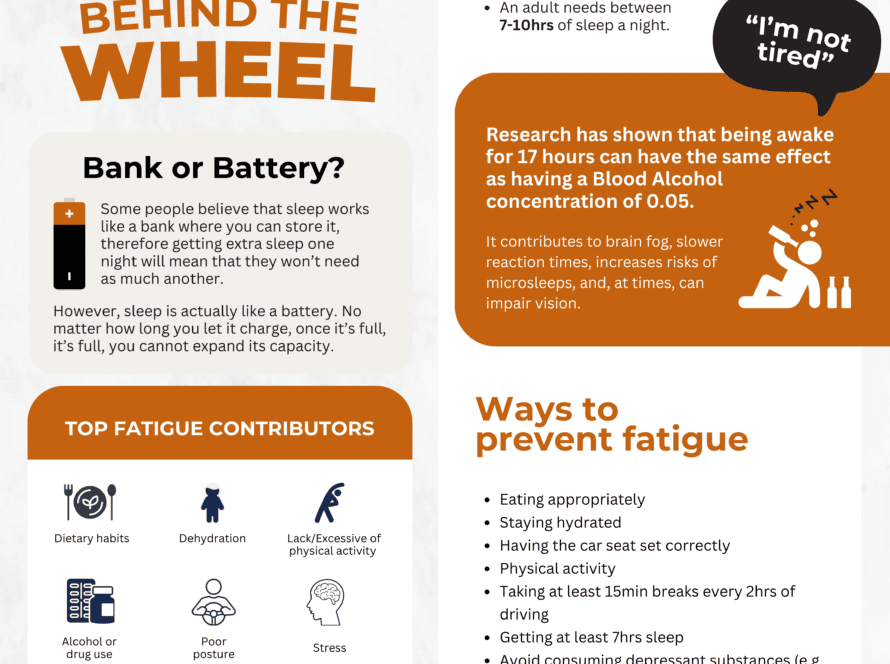
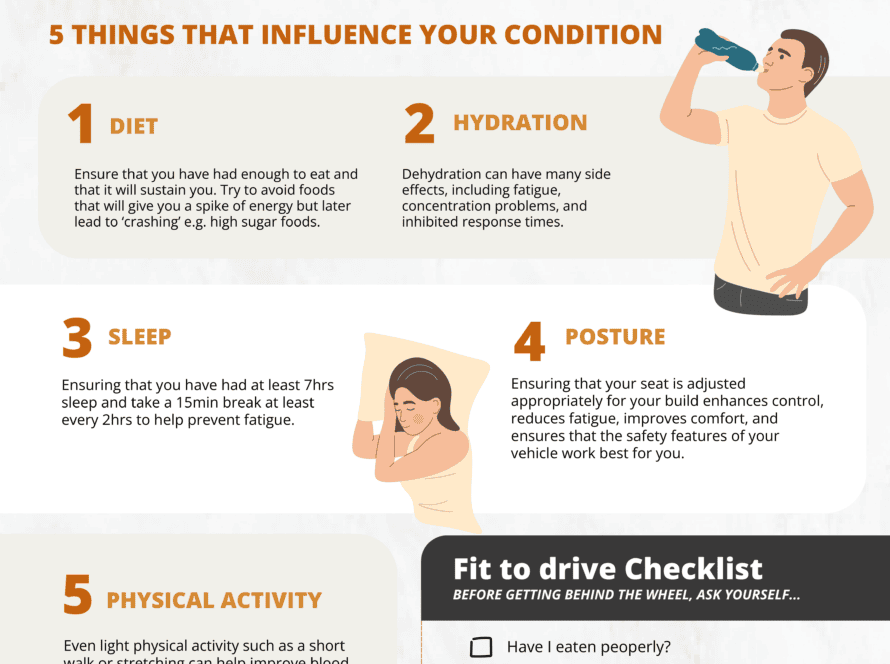
Cabin crew face some of the most demanding schedules of any workforce. Long flights, early starts, and frequent time zone changes create significant fatigue, and that fatigue doesn’t stop when the flight does. Fatigued driving is responsible for up to 20% of road crashes, and those awake for 18+ hours show impairment comparable to a blood alcohol concentration of 0.05%.
- 20% of road crashes involve fatigued driving
- 0.05 BAC equivalent after 18hrs awake
- 4.4x higher crash risk with only 5hrs sleep vs 8hrs
- 16hrs some crew remain active during long-haul flights
4 ways fatigue affects cabin crew on the road
1. Reduced alertness
Fatigue slows reaction times and increases the risk of microsleeps, brief, involuntary episodes of unconsciousness lasting just seconds. At highway speed, 100km/h, a 3-second microsleep means travelling over 80 metres with no awareness of the road.
2. Impaired judgement
Poor decision-making, misjudging distances, and missing road signs or signals are hallmarks of fatigued driving. Situational awareness drops significantly, making it harder to anticipate and respond to hazards.
3. Jetlag & circadian disruption
Frequent time zone changes disrupt the body’s internal clock. The result is insomnia, irritability, impaired concentration, and unpredictable sleep patterns. All of which compound the risk behind the wheel, often without the driver feeling noticeably tired.
4. Physical exhaustion
Hours of standing, serving and managing the cabin lead to muscle fatigue and reduced motor coordination. Physical tiredness reduces the ability to maintain proper posture, focus, and steering control, especially on longer post-flight drives.
What airlines & crew can do
- Regulated rest periods: enforce adequate layovers and duty-hour limits to allow proper recovery between shifts
- Fatigue management training: including road safety education specific to post-flight driving risks
- Safe transport options: shuttle services, ride-sharing programs or carpooling to reduce post-flight driving
- Sleep hygiene education: practical advice on rest environments, nutrition, hydration and managing jet lag
- Alertness technology: wearables and apps that monitor sleep quality and flag fatigue risk before driving
Fit to drive Checklist
Before getting behind the wheel, ask yourself…
- Have I had at least 7 hours of sleep?
- Am I experiencing jetlag or disorientation?
- Could I safely take a taxi or rideshare instead?
- Am I hydrated and have I eaten properly?
- Am I feeling stressed, anxious or emotionally overwhelmed?
- Have I been awake for more than 18 hrs?
Last updated: Sep 2026