Understanding how speed cameras in Australia work and the laws that govern them is vital for every driver. These technologies aren’t just tools for issuing fines; they’re proven lifesavers — speeding contributes to around one-third of all road fatalities nationwide¹.
Whether you’re a new driver learning the rules, a fleet manager monitoring staff behaviour, or simply a concerned road user, this guide to speed cameras will help you stay informed and safe.
Here, we unpack how fixed and mobile speed cameras work, what penalties apply when you go over the limit, and why staying within it can literally save lives.
How do speed cameras work?
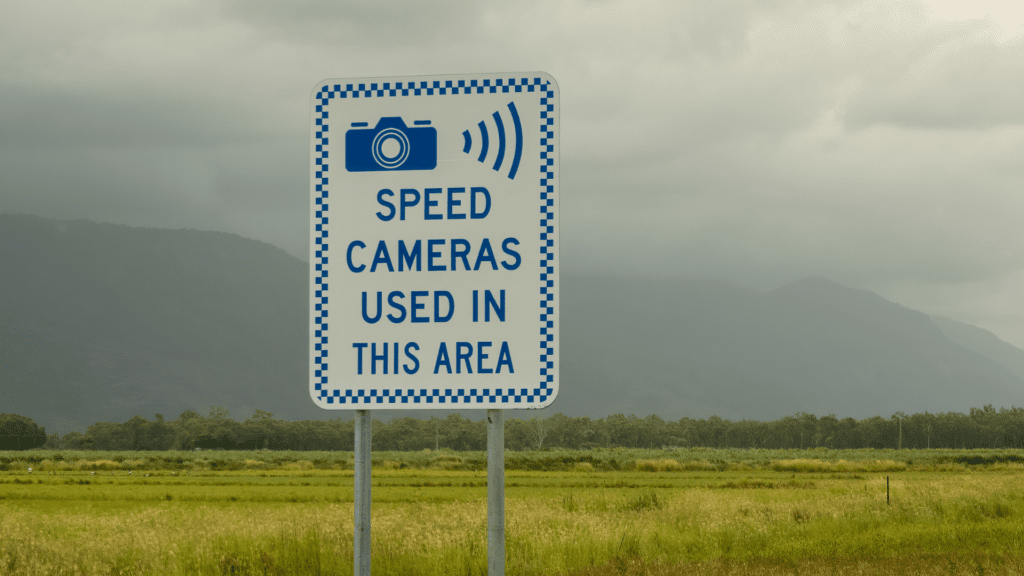
A speed camera system works by using radar, laser, or digital sensors to detect vehicles that exceed the speed limit.
When a vehicle travels faster than the set speed limit, the camera automatically records key details — including the vehicle’s speed, number plate, date, time, and location — and captures photographic evidence. This data is then verified by trained officers before an infringement notice is issued.
Across Australia, there are two main types of speed cameras: fixed and mobile.
Fixed speed cameras
Mobile speed cameras
Mobile speed cameras are mounted inside marked or unmarked vehicles parked along roadsides. They can detect a speeding vehicle the moment it enters their radar or laser detection zone, even before the driver spots the camera. Their flexibility and unpredictability make them highly effective in discouraging speeding across a wider range of locations.
No matter the type, speed cameras in Australia are designed to prevent dangerous driving, not just punish it. By enforcing speed limits in high-risk areas and promoting consistent compliance, they play a vital role in reducing crashes and saving lives.
How far can a speed camera detect speed?
A speed camera can typically detect a speeding vehicle from around 100 to 500 metres away, depending on the device type, weather, and road conditions.
In Australia, speed cameras use radar or laser-based systems capable of measuring a vehicle’s speed across multiple lanes. Factors such as road curvature, traffic density, and signage can influence detection distance.
For example, mobile speed cameras may have a shorter detection range than fixed cameras due to their setup, while high-end road safety cameras monitoring open highways can capture accurate readings from hundreds of metres away.
Regardless of the distance, the technology is designed to ensure that all vehicles are measured precisely and fairly under Australian law.
Speed camera accuracy
Speed cameras, regardless of type, are highly accurate devices that must meet strict national standards, with regular testing and calibration to ensure reliable evidence for the enforcement of road rules.
In Queensland, for instance, speed and red light cameras are tested annually in accordance with section 210C of the Traffic Regulation 1962. Each detection is reviewed by trained officers before an infringement is issued, ensuring accuracy and fairness. Drivers can even request a speed camera calibration certificate for transparency.
These high standards are consistent nationwide.
Regular checks, controlled environments, and human verification make speed camera enforcement one of the most dependable tools in Australia’s road safety framework.
What are the penalties for exceeding the speed limit?
If you’re caught by a speed camera, you’ll face a fine and possible demerit points based on how much you exceeded the speed limit and where the offence occurred.
Penalties for speed camera violations vary between Australian states and territories. In general, fines can range from around $150 to over $2,500, with one to eight demerit points depending on the offence severity. Repeat or excessive speeding may also result in licence suspension or disqualification.
Find more details on speeding penalties across each state:
Do speed cameras save lives?
According to the research, yes, speed cameras save lives… to an extent.
Research conducted at Monash University Accident Research Centre between 2013 and 2015, which analysed the data on road crashes in the Queensland areas where speed and red light cameras had been introduced, saw a 24-30% reduction in the number of crashes².
Even earlier modelling by the same institute identified that the removal of mobile speed camera warning signs in NSW would save anywhere between 34-43 lives per year in the state alone, and prevent more than 600 serious injuries.
Despite being several years old, the above research’s findings of speed camera enforcement being one of the most effective methods to reduce speeding can still most likely be explained by the concept and expectation of anywhere-anytime detection.
The panopticon effect induced by unmarked speed cameras should theoretically encourage obedience naturally. In other words, if a person is aware that they could be under surveillance, they are likely to avoid behaviours that will result in punishment.
With 27.5 % of fatal crashes occurring in 100 km/h zones over the 12 months ending August 20253, travelling and crashing at high speeds is something the human body is simply not equipped to deal with.
Learn more about safe driving with Road Sense Australia
Whether there are warning signs or not, whether speed cameras are right in front of you or tucked away, the truth is simple: if you don’t speed, there’s nothing to fear. No fines. No arguments. No victims.
We all make mistakes behind the wheel. No one’s a perfect driver. But every single day, families lose loved ones on Australian roads because someone has exceeded the speed limit. In the end, it’s not the speed camera or speed camera enforcement that kills, but the high-risk action of stepping on the gas.
If driving is part of your job, your safety matters — to you, your team, and the people waiting for you to make it home. Our Drive It Home Program is designed to build real-world skills that keep you safe and confident on the road.
Alternatively, if you’ve recently been booked for speeding or another offence, it’s not too late to change course. Register for our Traffic Offender Intervention Program today.
References
- International Transport Forum. (2025). Australia: Road Safety Country Profile 2024 [PDF]. OECD Publishing. https://www.itf-oecd.org/sites/default/files/australia-road-safety.pdf
- Monash University Accident Research Centre. (n.d.). Report Muarc 204. Retrieved from https://www.monash.edu/muarc/archive/our-publications/reports/muarc204
- Department of Infrastructure, Transport, Regional Development, Communications, Sport and the Arts. (2025, September 15). Monthly road deaths. National Road Safety Data Hub. https://datahub.roadsafety.gov.au/progress-reporting/monthly-road-deaths